Visiting Blue Mountains? Please consider staying with us!
Archaeologists, working alongside First Nations community members, have made a groundbreaking discovery in the Blue Mountains, unearthing 693 stone artifacts that span from the last ice age to recent times. These findings, located in an ancient cave known as Dargan Shelter, provide conclusive evidence of consistent human occupation in what was once a frozen, high-altitude environment.
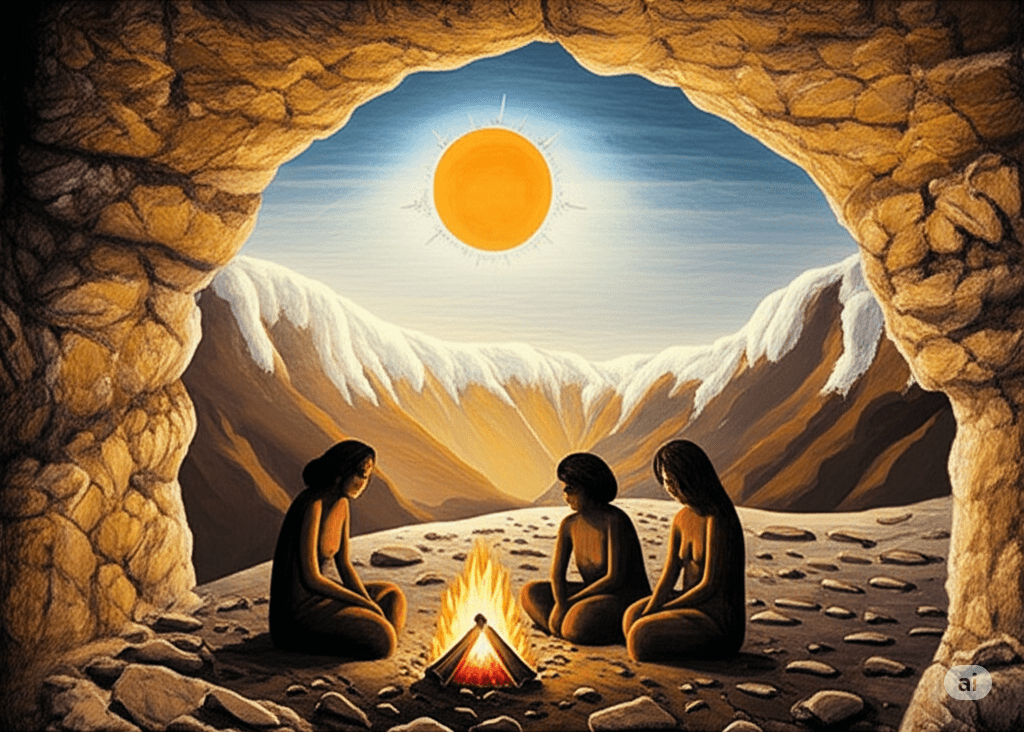
The research, funded by the Australian Museum Foundation and published in Nature Human Behaviour, reveals that Dargan Shelter, situated at 1073 meters elevation, was occupied as far back as 20,000 years ago. At that time, the upper Blue Mountains were characterized by treeless, seasonally frozen landscapes, making Dargan Shelter the oldest known occupied high-altitude site in Australia. Previously, researchers believed that Australia’s high country was too challenging to inhabit during the last ice age. However, these new archaeological results offer the first proof of repeated human activity and adaptation to these periglacial environments on the continent.
Wayne Brennan, a Gomeroi knowledge holder, rock art specialist, and First Nations Mentor in archaeology at the University of Sydney, initiated this collaborative research. His goal was to bring scientists and the community together to explore the cultural history of the Blue Mountains, ultimately aiming to improve conservation efforts for this significant cultural landscape.
The study clearly indicates that First Nations ancestors were adept at navigating and living in high-altitude periglacial environments. Excavations uncovered a remarkable layer of human activity, including well-preserved hearth features. This new evidence aligns Australia with global data, demonstrating that glacial landscapes were not necessarily obstacles to early human movement and occupation.
“Until now, it was thought the Australian high country was too difficult to occupy during the last ice age. Yet, despite the harsh conditions, research demonstrates people were moving in and through this high elevation landscape, which is approximately 400m above the treeline,” explained Dr. Way. The excellent state of preservation at Dargan Cave allowed for the construction of a robust chronology spanning the last 20,000 years.
Visiting Blue Mountains? Please consider staying with us!
First Nations custodians emphasize that their communities have resided in the Blue Mountains for millennia. “Aboriginal people have walked, lived and thrived in the Blue Mountains for thousands of years and they knew the cave was there. It is not only a tangible connection to ancestors who used it as a meeting place for sharing, storytelling and survival, but is a part of our cultural identity. We need to respect and protect our heritage for the benefit of all Australians.”
While pinpointing the exact groups who accessed the mountains in the distant past is challenging, it is likely that multiple groups were connected to this country. Today, local custodians regard Dargan Shelter as a highly significant family space.
Despite the Blue Mountains being a UNESCO World Heritage-listed site for its flora and fauna, there are currently no specific safeguards for its cultural heritage. The researchers and First Nations communities hope that by combining traditional knowledge with scientific research, they can ensure the protection of these invaluable historical archives for future generations. This study builds upon previous archaeological research in the Australian Museum, including work by Frederick McCarthy in 1935 and Professor Paul Taçon, and most recently, Dr. Val Attenbrow.
Visiting Blue Mountains? Please consider staying with us!
https://australian.museum/about/organisation/media-centre/oldest-occupied-cave-au/
 Magnolia Short Stays
Leave a comment